The hidden cost of punishing customers for mistakes
Modern businesses spend millions on advertising that nurtures a certain feeling of belonging in consumers. It’s not unusual to watch a TV advert and have no idea what a company actually does, because the imagery focuses on who it’s for. The company is on your side, so its product is especially for you.
But that sense of connection is also easy to undo. Dark patterns that attempt to manipulate users into parting with their money are cracks in that glossy façade that reveal the greasy cogs of the business underneath – and none of them is more common than the free trial that auto-renews with payment.
Monetising mistakes
My wife is a relatively new driver in the UK, and in the months since she took to the roads she has been consistently shocked by how many small mistakes have been monetised by the government and private companies. Forget to validate your supermarket parking? Fine. Accidentally drive a few metres in an unfamiliar bus lane? Fine. Blocked inside the yellow box at a junction? Fine. It feels like a level of paranoia is required to avoid unexpected bills.
I don’t drive, so this wasn’t something I’d ever had to worry about. But on reflection, I realised this kind of practice, essentially punishing users for innocent mistakes, is also on the rise in business. And sometimes it’s even worse, with users caught out by deliberately manipulative conditions.
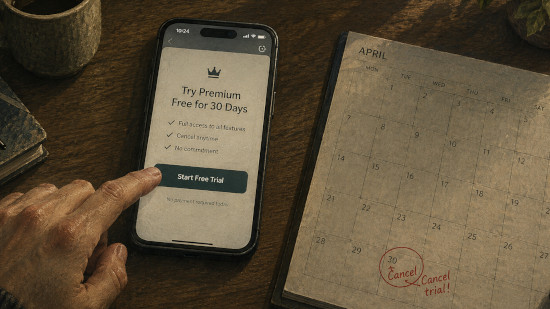
Free trials are everywhere these days. When signing up to a new streaming service or regular delivery, it’s common for a company to offer a month free of charge to demonstrate the service. But more often than not, they’ll take payment information and charge for auto-renewal once it expires.
Why is this practice so popular? Partly because some people will forget to cancel, but also – and this will sound familiar to anyone who’s read Thinking Fast and Slow – because people hate to lose what they already have. Money Saving Expert’s Martin Lewis summarised how this applies to free trials:
“There are many people who wouldn’t sign up to a movie service they don’t really need if they had to pay for it but they would do it for a free trial. They go in with a view to cancelling it when their trial ends but at that point they’ve already become accustomed to it and getting rid of it means it’s a loss. And we as human beings don’t like loss.”
The psychological cost
But while an auto-renewing trial might make a little more revenue in the short term – either from customers who forget to cancel for a couple of months or those who struggle to give up the service – I think that there is also damage to the brand when users do eventually decide to cancel.
Unorganised customers are left with a bad feeling due to the unexpected bills. They forget to cancel, see the monthly charge on their card, and curse the company for taking their money (as we’ve already covered, humans are averse to loss). That feeling may linger if they ever reconsider the service.
Meanwhile, more organised customers have already made a decision that must be reversed. When I sign up to a free trial, I set a reminder a few days before renewal so I remember to cancel. At that point, cancellation is the default action in my mind – for customers like me, the service now has a higher bar to jump, in that it has to be so good it convinces me not to cancel.
Billing sans card
I shared a particularly egregious example of this in a recent Field Notes newsletter, where a customer of a software development tool was hit with an overage invoice on a free trial that didn't even require a credit card at signup. The wording was probably there in the T&Cs, but that doesn’t eliminate the sour taste in the mouth of a potential customer with an unexpected bill.
This all comes back to the concept of care, which I find myself returning to increasingly often. Care nurtures trust between the customer and the business. It shows that while the company must make a profit, it won’t do so at the customer’s expense. It will act in their best interest as far as possible and provide a fair, high-quality product or service in exchange for their money.
Dark patterns (and auto-renewing free trials look relatively innocent compared to some of what goes on out there) make that relationship adversarial. While a pushier stance might boost immediate revenue, customers don’t forget how a brand made them feel. Punishing customers for mistakes, forgetfulness, or human nature could come back to bite businesses later on.