


Manchester City and the para-realities of the powerful
It’s been one of those weeks where it feels like we’re living through history. Manchester City were found guilty on all their charges of breaking Premier League financial rules, giving the club a £900 million boost over nine years.
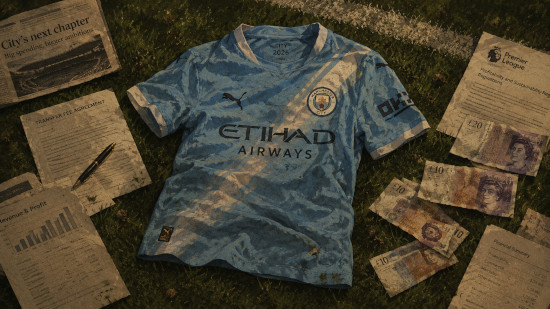
While the footballing world held its breath over potential appeals and sanctions, a verbal battle broke out online. The league, the club, and even the prime minister all weighed in on one of the biggest sporting scandals ever.
As a former journalist, I’m always fascinated by the carefully chosen words organisations push into public. This has been a particularly interesting saga for anyone reading between the lines of the various statements to understand how the parties are trying to guide our perceptions of the situation.
The Premier League gets riled up
On 29th September, the Premier League published the guilty verdicts with a statement much more strongly worded than your average press release. First, it set out a simple summary of the investigation’s outcome:
“An independent Commission has found Manchester City FC guilty of all charges related to serious breaches of the Premier League’s financial rules over a nine-season period, and the majority of charges in relation to its failure to co-operate with the League’s investigation.”
More pointed were its references to “sham” contracts, deals, and agreements that the club used to inflate its finances. The word appears in five separate places in its statement, which also labels the club’s attempts to funnel its owners’ funds through sponsors as a “disguised funding scheme”.
“The purpose of these schemes was found to have been to artificially inflate the club’s revenues, and reduce its costs, by more than £900 million during the affected period, to appear to comply with financial rules.”
There was no hedging of the perceived intent of City’s leadership, either. The Premier League said the club “clearly intended to circumvent the… rules” and made “concerted efforts to stop and frustrate the… investigation”.
In my eyes, the statement’s tone likely reflects the Premier League’s irritation with both the severity of the club’s conduct and its attempts to obstruct the investigation. It feels as though the league is about to throw the book at Manchester City, and will probably seek to apply a harsh punishment.
City on the back foot
We didn’t need to wait long for a City response. Minutes after the Premier League published its statement, the club uploaded a press release denying the charges with a rather astonishing tone of defiance, but little evidence.
First, it said it was “disappointed and surprised by the opinion of the Premier League Commission”. “Opinion” by itself is an interesting word choice to comment on a verdict resulting from a multi-year investigation, and reads like an attempt to undermine the legitimacy of the panel and its report.
City maintain their innocence, and claim to have a “comprehensive body of irrefutable evidence” to support it. There is no mention of what the evidence might be or why it wasn’t provided during the course of the investigation. Then they return to undermining the process with more linguistic trickery:
“The Premier League process remains ongoing, with significant elements uncompleted. Manchester City FC will now pursue the appeal avenues open to it, on the basis that the opinion contains clear material errors, of law, principle and fact, and is unsafe.”
Again, without any substance or specifics, it’s hard to see this as anything more than an attempt to stir up emotion in supporters. What are the “clear material errors”, and how can a legal process be “unsafe”? And there’s that word “opinion” again, quietly chipping at the decision’s integrity.
I think City’s statement rubbed many up the wrong way because of a perceived arrogance. There’s an implied assumption that the reader will take it at face value, without any supporting evidence, over the findings of a formal investigation that followed due process. City have every right to appeal, but some of their language is almost insulting to the commission.
Number 10 wades in
I usually avoid politics, and they're not the main focus of this post, but I would be remiss not to mention Andy Burnham's comments during the week. The day after the league's verdict, the prime minister said he would be "really concerned" to lose City's owners if they decided to sell up as a result of any sanctions, as they've been "a huge partner in the building of modern Manchester". He also noted that he "can't intervene more in the process" – suggesting he had some previous involvement. Amid a backlash, Downing Street later said that "there can't be any suggestion that anyone is above the rules". "Wherever wrongdoing is established, those responsible should face the appropriate consequences," a spokesperson said.
Perception management
At school, the first thing my teachers taught us about factual writing was to PEE. “Go into that exam hall and PEE all over the paper!” they would proudly tell a hysterical room of 12 year-olds. It stood for point, evidence, explanation, and essentially meant that if you make a claim, you need to back it up.
City’s leaders would point to the ongoing proceedings as the reason for their vague remarks, but the tone of their statement suggests that there could be more going on – something that tracks with recent trends when powerful people and companies respond to accusations of wrongdoing.
In his 2016 film HyperNormalisation1, Adam Curtis posits that when faced with an increasingly complex world, leaders and society instead choose to stand up a fake, simplified version – a controllable illusion. One technique in their toolkit to maintain desired narratives is called perception management, and involves guiding others towards a desired interpretation of information.
One example in the film is tied to the rise in UFO sightings in the 1990s. If you believe the conspiracy theories, these were in fact tests of new military technologies, and the US government leaked fake top-secret memos to enthusiasts to perpetuate the idea of an alien cover-up amongst the public. With the right influence, their audience would accept a simple narrative.
Competing narratives
A similar concept applies here – perhaps City believe that if they state their innocence often enough and confidently enough, while hinting that the verdict is just an “opinion” and the investigation was flawed, enough fans will believe them that a counter-narrative will begin to change public opinion.
UFO sightings involve an element of the unknown, while the facts of the Manchester City case are in black and white on paper. But they’re complex – even the summary of the commission’s decision is 40 pages long, and I doubt most football fans will read it. Statements, soundbites, and tweets are easier to digest, and confirmation bias will play a part. If a fan wants to believe their club is innocent, they’ll take any shred of evidence, however flimsy.
However, football is highly partisan. Some City fans might be convinced by their owners’ words (and there are many who are not), but that won’t be enough to sway overall public opinion when most are baying for blood. Posts calling for harsh punishments have quotes and email screenshots attached, while you’d have to take City’s word over their “irrefutable evidence”.
Another obstruction to the parallel narrative is that it has debatably become more complex than the Premier League’s. Reporters believe City’s plan is to claim sponsors’ funds came from the Abu Dhabi government and not the owners. But the Abu Dhabi United Group’s founder-owner is the UAE’s vice president and deputy prime minister. More confusingly, primary sponsor Etihad Airways stated in 2015 that it funded its deal “from its own liquidity” – explicitly saying the money did not come from the Abu Dhabi government.
It will be a rocky few months. Manchester City have lodged an appeal, again claiming innocence. The Premier League clearly wants the process to be over quickly, lest another season be brought into question. Meanwhile, City travel to Anfield next weekend to face an inevitably hostile crowd. Which narrative will prevail? We can only hope it’s the one supported by the facts.
Notes and references
- I add a footnote only to reiterate that you should watch this film. I’ve probably watched HyperNormalisation three times over the years, and every viewing is just as captivating, both as a hypothesis about our world and as a work of filmography.

