


Field Notes 13 // Hotel life, Waymo, and the World Cup
This is Field Notes, my monthly newsletter on technology without the hype. Subscribers get it weeks before it goes up on the blog. Subscribe below.
Hotel living is a perfect microcosm of daily life. It’s the way we’d all live if cities were as affordable and walkable as we wish they were. You have a book, a TV, and a desk within reach; a gym and good food available at all times. A good hotel is like living the idyllic life you’d have if you were very wealthy – the happiest I felt this year was relaxing with a book in my room in Malta.
This month’s hotel in Austin, Texas felt different. I was on a business trip, so it was less leisurely, but it was the kind of hotel where you start to feel like part of a small community. Quite social. Not in the sense that you tell your life story to everyone you meet, but you get to know the faces and exchange little nods and greetings. It opens up mental capacity – yoyū – in a similar way to a long flight, when you’re thrown off-grid with time to think. It feels like you could reach your potential if you could only cling to that mindset.
All that is, except the treadmill. I write a lot about care and craftsmanship in life and business, and I’m convinced the treadmill is the enemy of anybody trying to apply their best. It’s a dreadful machine that artificially limits running in a way that makes it impossible to reach your potential. The way you need to ramp up and down to avoid dizziness, the feeling that a brief stumble could spell the end, the unnecessary sweatiness despite the air conditioning in the gym… It’s all just too unnatural to perform well.
Running on a treadmill is too unnatural – it's the enemy of anyone trying to apply their best.
But in the Texas summer, the alternatives are grim. Deterred by my initial treadmill run, I tried running outdoors one morning. Even before sunrise, the air was dry and caught in the back of my throat. I was drenched in sweat before I made it close to 5km. The sidewalks I covered would randomly end, as though they were built only for the aesthetic of the apartment buildings, never designed to be used, and didn’t need to go further than the boundary.
Yet there are people out there who do it. In an Uber back from the office one day, I saw a man I estimated to be in his late 60s, wearing only a pair of black running shorts, dripping with sweat as he inched his way up the sidewalk in the peak 35-degree heat. I admired his dedication to his craft – to doing things right, overcoming the obstacles to do the hard thing. Since arriving home, my morning runs in the European heatwave haven’t seemed so bad.
Waymo vs. Uber
I had some questionable Uber experiences in Austin – drivers speeding, cutting other vehicles off, and so on. One side of a road near my hotel was closed and one driver even tried to turn into the oncoming traffic across the street until a construction worker flagged him down and turned him around.
So while I was a bit apprehensive about trying my first Waymo, it turned out that having a robot drive me about was far more relaxing. I was expecting it to feel quite unnatural, but after a few minutes gawping at the spinning steering wheel it was easy to forget there was no human driver. The Waymos did occasionally take a turn uncomfortably fast or hesitate at a junction, but they always came to the right decision in the end. When one car encountered the same closed-off street near the hotel, it paused for a few moments to calculate a new route before turning safely away down another road.
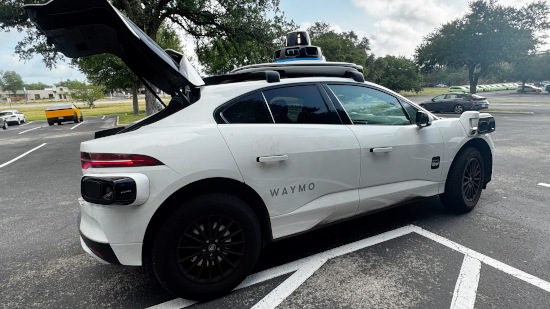
I can imagine a distant future where nobody owns a car and every vehicle is autonomous. The roads would be safer and more efficient – no traffic lights would be needed outside of pedestrian crossings if every car was networked and knew the others’ intentions. But such a scenario would require strong policy – the outlawing of manual vehicles, for a start. I think some people enjoy driving too much for such a restrictive law to ever pass. And I get it – we shouldn’t optimise away every skilful activity just because we can.
World Cup 2026
It all ended in heartbreak for England in a semi-final that only half-resembled a football match. England invited pressure after establishing a one-goal lead, dropping back with more than 30 minutes to go in a way that felt like a Southgate flashback. But the painful part is wondering what might have happened if the rules of the game had been consistently enforced, and Argentina had finished the first half either down to ten men or at least with enough bookings to warrant caution in the second. We’ll never know.
Still, despite my team’s exit and a few other blots on FIFA’s record (fleecing fans on tickets and transport, introducing advertising slots disguised as drink breaks, selectively enforcing red card suspensions), I’ll take mostly fond memories from the 2026 World Cup. It helped that I spent some time in one of the host nations during the tournament – a sport that is usually an afterthought in the States dominated water cooler talk, and bars that don’t usually even show football were atmospheric even for the less notable games. Walking down an Austin street lined with packed bars ahead of the US-Bosnia match, it felt like football had finally broken into the American consciousness – whether that lasts is a whole other question.
One moment that will stick with me is England manager Thomas Tuchel’s interview after his side beat Norway in the quarter-finals. “The result is fantastic… but I’m not happy with the performance,” he said. “We made life very, very difficult for us in the way we played… Sloppy, a lot of technical mistakes, not fast enough, not repetitive enough… We were lucky today.” These comments proved controversial – mainly because of the reporter’s odd decision to relay them to Jude Bellingham moments later – but I understood what Tuchel was trying to say, and admire his commitment to sustainable quality. He knows that a good result doesn’t mean much unless it’s built on stable foundations that will stand repeated tests. The way you work matters as much as what you produce – if you rely on heroics, it only takes one slip.
This month on the blog
In case you missed them, here are my best posts from July.




Things that left an impression
-
Anthony Hobday’s notes on software quality are a worthwhile read that mirror my own thoughts about care and craftsmanship in design. If you’re short on time, skip to the bit about the challenges of quality at scale. The lessons in this piece extend beyond software.
-
In a similar vein, I enjoyed reading through the recently-published Command Line Interface Guidelines. There are some differences, but they reminded me very much of the Unix philosophy (and indeed they do reference it). I love the idea of software as a collection of easy-to-use pieces that accept input and provide output in such a way that they can be easily chained together for more complex tasks.
-
I wound up watching an old interview with Seth Godin. He’s always interesting to listen to, but my favourite part was his anecdote about retail founders who would visit their shops and ask staff what they’d tried recently to try to improve the business. “Your job is not to follow instructions – your job is to make things better.”
-
My Chemical Romance recently visited Wembley Stadium on a tour stop celebrating the 20th anniversary of their album Welcome to the Black Parade. Designer Nate Piekos wrote a blog post detailing how he collaborated with the Gerard Way to put together the tour’s font, Keposhka, which plays into the show’s fictional Eastern Bloc setting.
Until next month – subscribe below to get next month’s newsletter first!

