Muse's The Wow! Signal is an unexpected resurgence
I’ve been a huge Muse fan for most of my life, but even I was feeling down on their prospects after their last two albums. Simulation Theory and Will of the People were the least “Muse-y” records in their catalogue, full of seemingly unrelated songs that often felt like the band delivering versions of other artists’ work – or even their own – with little originality or inspiration.
While it unfortunately took a divorce to get there, frontman Matt Bellamy told NME the inspiration has returned: “I went through difficult personal life things this past year, so making this album reminded me of making music when I was a kid in my teenage years, back when music was everything. ‘I can’t live without music’ – that feeling came back to me on this album.”
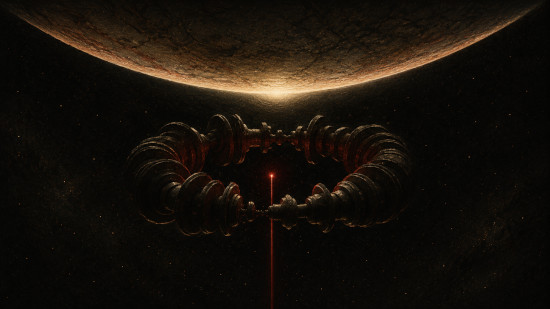
20 years after the climax of Muse’s “big three” albums with 2006’s Black Holes and Revelations, the band has returned to those space rock themes. The Wow! Signal’s title refers to a radio transmission received in 1977, speculated to be of extraterrestrial origin. But as much as the record wonders what might lie out in the stars, it also ponders very personal questions about ourselves.
This is the most serious Muse album in a long time. It is the story of a failed relationship, dressed up in space metaphors. You feel that Bellamy means what he sings, and there’s a darkness permeating through everything that’s cemented by closer Space Debris, and only more poignant on repeat listens.
Musically, there’s more of a focus on guitar songs and riffs (The Wow! Signal certainly inspired me to pick up my own guitar again). The album feels more coherent, with consistent themes and intros and outros that run together. The band undoubtedly benefited from the input of producer Dan Lancaster, who Bellamy says pushed them to improve parts and takes, bringing them past “the lazy point of middle age” and back to “the uncomfortable zone”.
The result is neither the energetic prog-rock angst of Old Muse, nor the too-clean imitation-parody of modern Muse. This is something completely new – a measured update that brings the rawness and emotional edge of the band’s early output into the 2020s. The Wow! Signal is an unexpected resurgence and the best album of this half of Muse’s career – and possibly beyond.
Track by track
Feeling inspired by the revival and with time to kill on a recent business trip, I settled into my plane seat and listened to The Wow! Signal several times in full, jotting down my thoughts on each individual song.
Scores are hard – especially when reviewing an album that stands as more than the sum of its parts. On the plane, when I dealt out the initial numbers, I gave one song a perfect ten. Then I took a look back across Muse’s career and thought: “Is this really as good as Citizen Erased?” It was not, and I revised many of the ratings downwards to counteract similar recency bias.
The Dark Forest [7/10]
Opens with the Wow! signal itself, and launches into an Arabian-style guitar solo cut with strings that feels very Black Holes and Revelations – although the verse’s proclamations about doomed space exploration remind me more of certain parts of the Exogenesis Symphony. A promising start with far more intrigue than recent Muse songs, and just when you think it’s all over, the galloping guitar kicks back in for a dramatic choir-backed section and a fast-paced outro solo that I’m sure will be a live highlight on the upcoming tour.
Nightshift Superstar [5/10]
The most poppy song on the album, oddly positioned between the grand opener and a heartfelt ballad. Chris Wolstenholme’s bass kicks it up a notch beyond previous efforts like Panic Station and Compliance, and lyrics that seem cheesy at face value – especially the chorus – take on a more sinister meaning in the context of the album. However, it still feels like it needs something more beyond the bass noodling to earn its place on the record. The only song lacking a moment that really feels like proper Muse.
Shimmering Scars [6/10]
The repeating motif and chord sequence in this ballad is very simple – a world away from the complex songwriting I’d associate with “classic Muse”. But Bellamy delivers the vocals with such emotion that it somehow works, despite its flaws. The song feels deeply personal – especially in its final stages (“I carried half the blame” is particularly intense), and the tremolo sections give it an unexpected rock edge that I’m sure will work well live.
Cryogen [8/10]
Bellamy said the band approached this song as though they were writing in the 2000s, and it shows. The fuzzed solo harks back to Plug In Baby, but the rest of the track is original enough to avoid the band feeling derivative of themselves. Highlights are the out-of-control middle breakdown and the metal outro with its neat little bass solo. This was the single that first screamed “Muse are back”, and now we have an album to back it up.
Be With You [5/10]
Suffered as the first single released after Unravelling, with a teaser trailer that suggested things were about to get heavy. Instead, the organ-backed first verse leads into an electronic second that feels like an anti-climax compared to what the trailer promised. Bellamy once again brings the emotion and there is a nice guitar solo tucked away in the middle. It fits better stylistically than Nightshift Superstar, but it’s probably the most forgettable song on the album, and the one I’m most tempted to skip.
Hexagons [9/10]
Now we reach the run that makes The Wow! Signal the album it is. Hexagons is original, mysterious, and epic in a way we haven’t heard from Muse in a long time. It has huge range – from the initial layered guitars and acoustic verse to its grandiose heights – and there are shades of Hoodoo in the verses, as Bellamy declares himself defeated and vulnerable (“a marionette with severed strings”). This is a song that will no doubt be a big highlight of the upcoming live shows and survive in memory well beyond this album cycle.
A meta story?
While most of the album's lyrics focus on Bellamy's divorce, in my eyes Hexagons could just as easily tell the tale of Muse's career, from their greatest commercial success with 2009's The Resistance to their descent into the vague, surface-level "fight the power" singles that have disappeared with The Wow! Signal. I don't know who the "she" is who "ghostwrites [his] obsessions" – it could be a partner, the band's management, or money itself – but this track delivers a clear message: Bellamy is no longer listening, and he's back to writing personal music he deeply cares about.
The Sickness in You and I [8/10]
The drums from the Hexagons outro transition flawlessly into a Prince-influenced track that’s somehow as funky as it is heavy. These transitions are dotted through the album and help it to feel like a whole rather than a series of unrelated songs (I’m looking at you, Will of the People). The riff – debuted in isolation following Cryogen at Brixton Academy – is complemented by a catchy chorus that forms perhaps The Wow! Signal’s biggest earworm.
Unravelling [8/10]
Another transition, as the electronic live intro on the end of Sickness flows into Unravelling. This is a year-old song, but fits effortlessly into the album. It was the first indication that something was wrong in Bellamy’s marriage and it encapsulates the record’s themes of coldness and mistrust in its lyrics, launching into a powerful belted chorus that sits among Muse’s best in this subgenre – my first thoughts were of Fury. If the solo was a little longer and more varied, we might have been looking at an all-time Muse classic.
Hush [7/10]
When I heard Muse had collaborated with Ellie Goulding, I expected to like the resulting song a lot less. I’m not a fan of the poppy verses, but Hush is rescued by its chorus – a desperate plea to a partner to take a step back and calm down before things fall apart, capped with a glorious sliding note before everything goes quiet for just a moment. It also has one of the most creative solos on the album. If modern Muse are going to write some poppier songs, this is how to do it without losing their identity in the process.
Space Debris [8/10]
We’ve grown used to Muse albums closing on intense songs like Knights of Cydonia and We Are Fucking Fucked, but here we get a quiet, heartfelt track. Bellamy mourns his marriage through a series of space metaphors, telling the tale of a partner who couldn’t open up enough to save their relationship. The string-backed instrumental section pulls at the heartstrings and takes me all the way back to Blackout, and the closing allusions to drugs bring the rest of the album into question – even upbeat songs like Nightshift Superstar now seem darker and sadder. Some were disappointed at a slow, acoustic closer, but to me this is really masterful, and shows Bellamy has his spark back.