Alternatives to the UK government’s social media ban
Last week I covered the UK government’s plans to effectively force phone manufacturers to implement on-device age checks and content scanning. I wrote about the security risks of ID checks and the horrible implications for privacy, when in order to identify who is and isn’t a child the nation’s adults will be forced to link their real-life identities to their online activities.
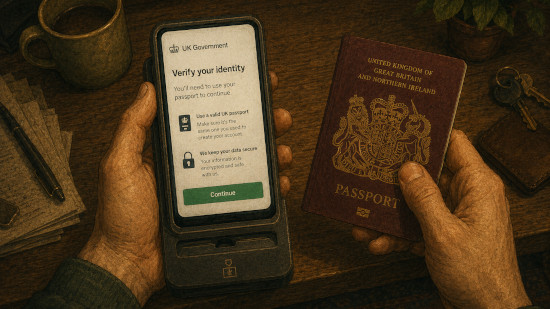
In the days that followed, the government announced further plans – this time for a social media ban for children. Sites like TikTok, Facebook, X, and Instagram will be blocked completely for under-16s, while 17 and 18 year-olds will be subject to government-enforced “overnight curfews”.
The ends are a net good – in my eyes, social media in its modern form is undoubtedly harmful, and I don’t buy the argument that kids’ lives will be missing anything without access – but as before, the means are the concern. This doesn’t only affect children. It affects every adult in the UK and their freedom to use their devices and access the internet without snooping.

For that reason, I was disappointed to see the response to critics of the ban was often a dismissive: “Oh, so you think social media is good for children?” Deliberate or not, that’s a complete misreading of people’s concerns.
But rather than spending another week running through everything that worries me about the government’s plans, I’m going to adopt the optimistic tone I’m aiming for and suggest some alternatives that could be just as – and in some cases more – effective than blanket mandatory ID checks.
Parental oversight
The most obvious countermeasure to kids accessing things they shouldn’t online is to remove their ability to browse without supervision. When I was young, internet access was confined to a family computer, used in one of the communal rooms in the house where my parents could see what I was doing. I was given my first phone that could send text messages at 14, and mobile internet access – including social media – came much later on.
But that was a different time. When I got that first phone, social media barely existed, mobile web access was slow and basic, and smartphones hadn’t been invented yet. There are “dumb phones” on the market now that emulate the Nokia 3310 experience, but parents might be hesitant to buy them, instead prioritising future-proofing, or giving kids hand-me-down smartphones.
What smartphones do offer are parental controls. In the Apple ecosystem, for example, children’s iPhones can be set up under their parents’ accounts, and some quite granular restrictions can be applied using Screen Time. Parents can limit access to certain apps completely, set time limits on others, and effectively implement their own curfews with the Downtime feature.
The counterargument is that this requires parents who both care about their kids’ smartphone usage and are technically literate enough to configure their own restrictions. There are some low-tech alternatives – like not allowing phones in the bedroom to prevent overnight usage when children should be sleeping – but not all kids will be protected without a centralised approach.
Outlawing manipulative design
When some number of children will always get online, you must go to the source: the social media companies. The big tech firms have already added some features to protect kids, likely to try to ward off regulation, but tools like Instagram’s teen accounts still require parental involvement to set up.
The problem is that social media isn’t what it used to be. In the late 2000s, sites like Facebook were simple chronological feeds of your friends’ posts – you checked their updates, hit the end of the list, and stopped. But now they serve algorithmically-generated feeds, drawing in content from outside your network in a way designed to manipulate emotions and drive engagement.
Tighter regulation of those algorithms – as well as supporting features like infinite scroll – would have the dual benefit of dulling the addictive element of social media (by adding a natural break-off point to sessions once the user is caught up) and reducing exposure to potentially harmful content (because more of what the user sees would be from people they choose to follow).
The other notable difference is that this would benefit the entire population. While children are worst affected, many adults are also manipulated into endless “doom scrolling”, and content targeting engagement and reach has turned many online discussions into an endless barrage of pessimism, abuse, and worst-possible interpretations. The tech companies would never agree to this change on their own – engagement is revenue, after all – but it would have a huge impact on children and wider society – and all of that without necessitating dystopian identity checks to access the internet.
Perilous ambiguity
It might be tempting to stray into regulation of online content and moderation here, but that’s a hard nut to crack. Some platforms have black-and-white rules that work well – no nudity, no calls to violence, and so on – but when content rules start to use vague terms like “harmful” they become vulnerable to the whims of whoever is in charge on any particular day. One example of this was the moderation policy implemented by the former Twitter leadership in the late 2010s, which was criticised for ideological bias in its application and abused by mass reporting campaigns.
A combination of these measures – coupled with informed media literacy education delivered to children in schools – would have benefits for both the young and the rest of the country. Together, they would be more effective than ID checks alone, and equip young people with the skills they need to handle “harmful” content when they inevitably encounter it, ban or no ban.
But the truth is that they’re more difficult solutions than trying to ban social media outright. The ban is a single move that allows the government to wash its hands of responsibility. “We blocked it – what else do you want?” It won’t have the desired effect when technically literate children manage to find workarounds – and worse, the damage to online anonymity, freedom of expression, and business could be the plans’ most significant consequence.