


Google's AI push could break the information economy
At this week’s I/O developer conference, Google announced a Search revamp featuring an “intelligent AI-powered Search box”, which it called its biggest upgrade in more than 25 years. In practice, this means Google Search will sometimes drop users into an AI interface that looks more like a chatbot conversation than the traditional list of links we expect from search results.
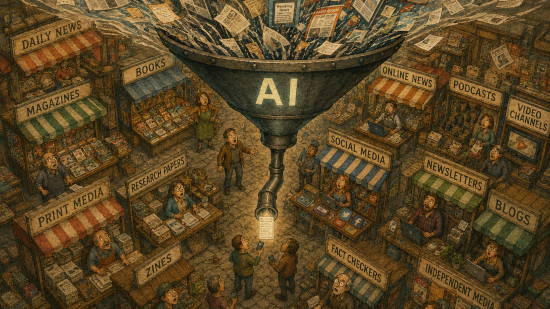
AI summaries have appeared at the top of Google results for years – and have contributed to a steep drop in traffic to some sites – but this goes further. If the world’s top search engine goes AI-first then users will be increasingly reliant on AI-gathered data. People will simply review the information an LLM prepares, rather than clicking on links and browsing sites themselves.
Google’s move risks upending the online information economy it depends upon. From huge media conglomerates to individual writers, the people who create websites write to be read. If their work is just going to be summarised in an AI result, they might not bother anymore. And what happens then?
Online lookouts
One more useful feature Google shared was “information agents”. These essentially function as an AI-powered descendant of Google Alerts. The user provides a query and the agent reviews web content in the background until something matches – then sends an update. This sounds like a useful evolution from historic functionality, and an example of a scenario where the additional nuance of an AI agent provides proper value.
Writing for nothing
Like so much else in the AI era, Google’s move seems short-sighted. LLMs need to learn from human content to answer queries, but AI results remove the incentives for people to create that work in the first place. Why waste time producing content just for it to be stolen by a model that will prevent most people from reaching your site and providing exposure or revenue?
In the near future, the sentence you’re reading right now will be hoovered up by Google and the other AI companies. And at some point in a slightly more distant future, it may well be paraphrased and served to a user in a search result, with only a small mention of this blog in a footnote. With their query answered by the LLM, the user will have little reason to click through.
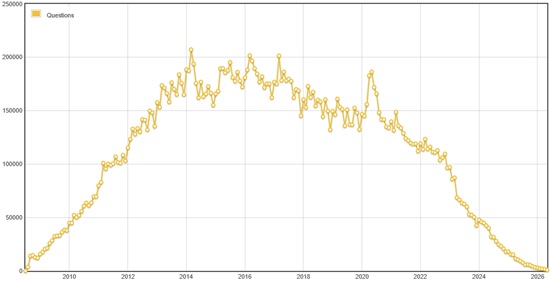
It’s the Stack Overflow problem on a macro scale. AI can regurgitate old information, but if fewer people produce anything new, it will stagnate. As new topics emerge, it will be difficult to find detailed or accurate information – the AI just won’t know, because nobody wrote anything for it to learn from.
What’s more worrying is that this is another kick in the teeth for mainstream journalism. Quality reporting is essential to hold government and businesses to account, and much of the media’s revenue originates from advertising impressions that will be lost if an AI search tool returns the information.
When the clicks dry up
As Google progresses down this path, community building will become more important. Websites will need to connect more closely with their readers and nurture relationships to encourage them to visit directly. (Personally, I’m in a middle ground in this respect. I receive more search traffic via Kagi – which prioritises small and independent sites – than via Google, but I don’t have many hardcore readers who would take the time to visit my site directly.)
It’s also possible that websites will start hiding more of their content, even if it’s just behind a free signup form. Search engine discovery is a big incentive to make information publicly available, so if that disappears it may be more valuable to gather newsletter subscribers in a model akin to Substack. If sites can reach readers’ inboxes, there’s no need to worry about search engines.
Google needs to realise that not everything has to be AI. Users know Gemini exists – they go to Search to review information themselves.
As a user, I think it’s time to jump ship. I wrote before about how refreshing Kagi felt – it’s like I took a time machine back to Google’s peak – and £4.50 a month isn’t a lot for a better search engine. Since the I/O news broke, I’ve further migrated to Kagi, using its session links to add it to my browser search bar on desktop and mobile. It’s now my default across all devices.
And for Google… Well, I think Google needs to realise that not everything has to be AI. Users know they can go to ChatGPT or Gemini to get answers. They use Google Search when they want to review the information themselves. People appreciate that AI is a useful tool, but are frustrated when Big Tech tries to shove it down their throats to the detriment of existing products.
In forcing it on Search users, Google risks sabotaging its main product just to prove that AI is the next big thing. And worse than that, the knock-on effects could push the modern internet even further from its idealistic origins.

