FIFA's failed sell-off and the duty of custodianship
Football’s governing body FIFA has scrapped its controversial plan to sell stakes in its competitions – including the World Cup – to private investors. President Gianni Infantino said it had “created divisions” that were “no longer in the interest of the objective” – which is a huge understatement.
FIFA Forward Enterprise came in the wake of a World Cup that fleeced fans in unprecedented ways. Ticket prices stretched into the tens of thousands; train journeys to stadiums inflated to ten times the usual fare; and advertisement opportunities branded as “hydration breaks” allowed commercial interests to meddle with the game itself, effectively splitting matches into quarters.
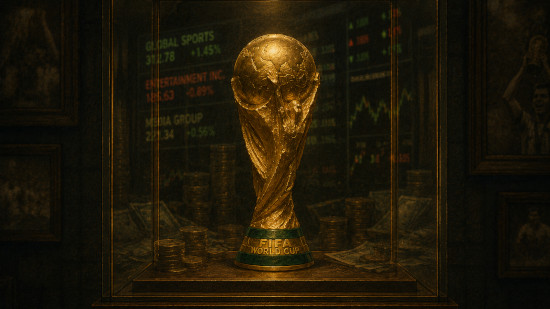
Mere weeks after the final, Infantino announced his initiative, which would hand control of competitions like the World Cup to a commercial subsidiary so that minority stakes could be sold to private investors. It was rumoured that Infantino himself would become the organisation’s commissioner after his FIFA presidency, drawing a salary in the tens of millions of dollars.
Worse still, he tried to hold member nations to ransom, promising them funding to the tune of $40 million each as long as they backed the plan before the September deadline. Most of the football world reacted with disgust – perhaps most notably the European governing body UEFA, which threatened to boycott FIFA competitions. Ultimately the pressure was too much, the plan was withdrawn as quickly as it was announced, and now Infantino’s unpopular presidency hangs in the balance.
Custodians, not owners
Why am I writing about this on a blog that usually focuses on technology? American governing body CONCACAF’s initial statement wasn’t as strong as UEFA’s threatened boycott, but there was one line that stood out to me:
“As leaders within football, we are the custodians of the game. Collectively, FIFA, the Confederations and every Member Association have a responsibility to always act in the best interests of the sport. Every decision we make must be guided by good governance, robust processes and long-term stewardship.”
This is exactly the philosophy that I promote in my writing about care. It especially applies to FIFA, which holds perhaps the world’s most treasured sport in its hands and is responsible for keeping the game beautiful. Its officials are the custodians of football, not owners who can sell it off.
What Infantino has done in the last few years – but especially the last few days – amounts to the attempted enshittification of something that should never have been a commercial interest to begin with. FIFA should be less like a multinational corporation and more like the organising committee of a village fete: full of volunteers who care about the event, its history, and its sustainability – not commissioners taking home eight-figure salaries.
Good at the core
FIFA Forward Enterprise is representative of broader trends, even within organisations that are supposed to be making a profit. Not everything needs to be commercialised to within an inch of its life, and it is possible to make the world a better place by providing a quality product at a reasonable price and on fair terms, with enough profit to make the endeavour worthwhile.
Many organisations – even those with much better reputations than FIFA’s – treat ethics like a balancing act. Much like FIFA’s peace prizes and inclusivity reels, they point to their green credentials, charitable donations, and so on. Some good comes from those things, but so many businesses give with one hand while squeezing their customers for all they’re worth with the other.
There is a place for corporate social responsibility (CSR) initiatives, but in my mind it’s more important that your core business is doing good. It should provide as much value as possible in a way that’s fair to customers. CSR shouldn’t be used to offset negative impact elsewhere – immoral practices don’t generate a bill that can be paid off with a few unrelated good deeds.
Every business is a custodian of something: customers’ trust, employees’ time, the market it operates in. The question is whether it acts like one. I wrote earlier this year about caring about the things you do. FIFA is the most visible recent example of what happens when the people in charge don’t.