Dispatch from Japan: Onsen hotels, busy UIs, and value
Visiting a new place opens your eyes to things. I remember when I first moved to London in the early 2010s, the crowds, packed bars, and plentiful artisanal coffee shops all felt like they meant something. In a new environment, your brain notices every little detail, and it feels like a chance encounter – either with a person or a new idea – could change your life.
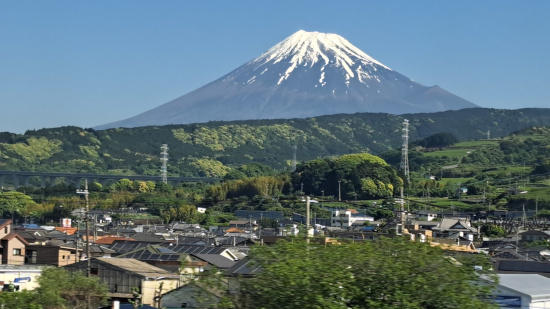
Japan takes that novelty in unfamiliarity and ratchets it up to a new level. I’ve visited enough that I know what to expect, but small details still take me by surprise. Much is said about the traditional parts of Japanese culture – temples, shrines, tea ceremonies, and so on – but I always think that modern city life is just as fascinating. It feels like what you’d get if you started in the US or Britain in the 1980s and carved out an alternate timeline to 2026.
Everything is similar, but somehow different enough to be noteworthy. On past trips those notes only existed in my mind, and found a way to evaporate as soon as I touched down at Heathrow. But this time, like a real writer, I’ve been keeping notes as I go so I can share those thoughts before they fade.
Off the beaten track
The beginning of my trip wasn’t especially glamorous. The early days were focused on family and personal admin. I spent a lot of time in cars and on trains, hopping between business hotels with rooms so small that you need to stand with one foot in the bath to shave in front of the mirror, and saw the inside of a local police station in Aichi that I bet no tourist has ever visited.
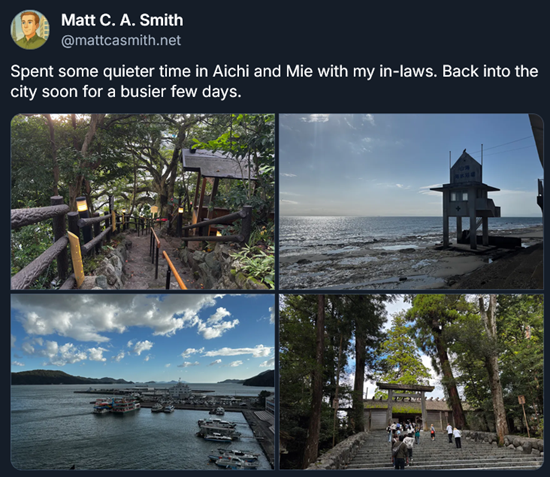
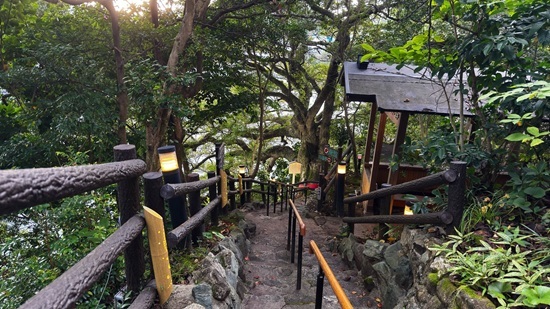
The highlight of the week was a trip to Mie, where we stayed at an onsen hotel and visited the Ise Jingu shrine – one of the most important shrines in the country, but far enough off the Tokyo-Kyoto tourist trail that it thankfully feels like a place carrying the appropriate weight, rather than a tourist attraction. After praying, we walked the nearby traditional-style shopping street and sampled the local sake and mochi before turning in for the night.
The hotel felt like an occasion in itself. We were greeted by perhaps a dozen staff and shown to our room, whose hallway led into an expansive living space with beds, a dining area set on a tatami mat, and a step down to a sofa looking out across the sea. Before breakfast on the day we departed, we visited the private baths, which were individually themed – we bathed under water flowing from a raccoon dog’s mouth, which felt like a fun choice.
Menus, options, and paperwork
Japan flips the script on customer experience when compared to the West. In-person service – sometimes lacking in London – is generally excellent. The onsen hotel was obviously fairly high-end, but staff are still plentiful and very attentive in normal shops, restaurants, hotels, and so on. Meanwhile, the digital user experience is often something of a maze to navigate.
I encountered a good example on landing at Tokyo’s Haneda Airport, where my wife wanted to send our suitcases to the hotel by courier. The assistant at the counter was very friendly and efficient, but checking in our bags required the completion of several paper forms. In the UK, most of the process probably would have happened behind the desk on the point-of-sale system.
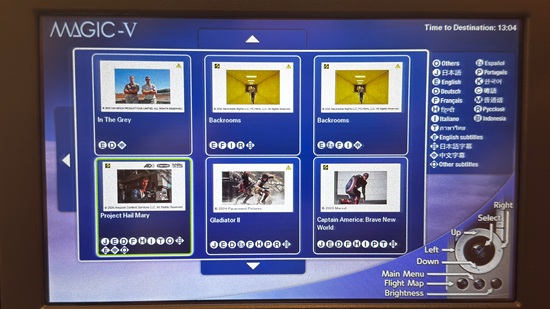
Rewinding 12 hours, I stepped onto our Japan Airlines flight to discover the seat-back entertainment system to be typically confusing. Films were listed in a random order with no search function, languages were designated by so many symbols (Ⓐ, Ⓑ, Ⓒ, etc.) that they required a key. There were even double entries for some videos to account for different combinations of them.
The same UI issues crop up frequently, whether you’re working a website, a station ticket machine, or the control panel on a bidet toilet seat. However, what I do prefer over their Western equivalents is that they hide little from the user, and give people who know what they’re doing the information density and optionality to get what they want, even if that comes at the expense of simplicity. There’s little white space to be found in UI design here, and while it can be confusing at a glance, I think it’s a price worth paying.
Kanji in web design
One of the other Japanese design habits I've always struggled with has an interesting technical rationale behind it. During the long-distance portion of our relationship, I often had to shop on Japanese websites to buy gifts for my wife – a task that was much more difficult on websites that embedded large parts of their text within images, rendering it untranslatable. I later learnt that one reason for this is that kanji script, which has up to 50,000 characters (with a smaller number in daily use), can push font file sizes so high that it can be more efficient to embed text in images when using other fonts for secondary text requiring emphasis.
Care and affordability
My itinerary gave me a good look at life away from the tourist spots. One thing that always stands out to me in Japan is the value when eating out. I ate at a small-town Sushiro (sushi chain) with three other people, ordering around 40 small dishes. The total bill came to ¥9,000 (about £43) – less than I sometimes pay for my own meal in London. I know my calculations as a visitor aren’t the same as locals’, but even proportionally, that’s very reasonable.
When you pick apart companies’ design choices in the UK, you often reach a point of, “Ah, they must have done this in response to X societal issue”, or, “Change Y must have given them an extra few pence of margin per unit.” For example, I recently realised that the new design of my instant coffee jar is actually a distraction from the fact that it’s 100g lighter than the previous one.
In Japan, however, there are little indicators everywhere that the people designing things actually care about the people who use them. Sometimes economic choices are required, but quality usually shines through. To choose just one example, yoghurt never sticks to the lid because the foil features microscopic bumps inspired by the lotus leaf. I suspect small pleasures like a Sushiro meal remain within reach for the average family partly because of similar consideration from those on the business side.
Steak on a budget
One of my favourite food court lunches was from a steak chain called Pepper Lunch. For ¥1,480 (£7), I got steak with vegetables, served to me on a sizzling plate so I could finish cooking it to my taste. My wife was surprised at my enthusiasm for the place, but to me this demonstrated a level of value and trust in the customer that I never encounter in the UK.
That concludes my first dispatch from Japan – I’ll be back with more in next week’s post. This article was written on the move, my writing sessions split between all those tiny business hotel rooms, and as such jumped between various thoughts from throughout the first half of my trip. For the next, I’ll be staying put for longer in Tokyo, and then returning to my desk, which hopefully will allow a little more time and space for structured writing.