Dispatch from Japan: Courtesy, character, and Kojima
Last week’s post came to you from various Japanese business hotel rooms. This one was written at cruising altitude aboard a Japan Airlines Boeing 787, en route back to Heathrow with a belly full of beef curry and red wine.
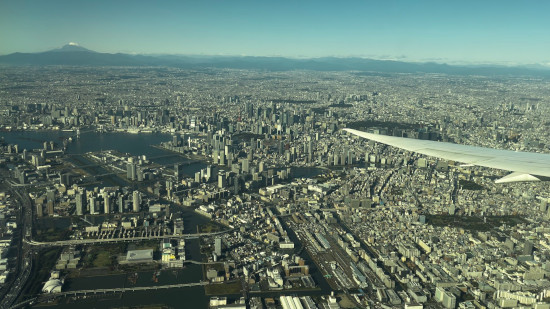
Following some quieter time in Aichi and Mie, it was time to return to city life – first in Nagoya, and then Tokyo. Amongst the noise and crowds I found organised chaos on public transport, commercial posters and interiors with far greater character than we usually see in the modern West, and behind-the-scenes artefacts from one of my favourite game developers.
Notes in motion
As I mentioned in my first post, I tried to be more cognisant of my impressions of Japan on this trip. In fact, I was so enamoured with my mini-notebook that most of my shopping was stationery-focused. My favourite brand is Rollbahn, whose notebooks I carry every day. As part of their range they make a notebook no bigger than a keyring, which I stocked up on to try to continue the habit at home. There's something nice about writing by hand. It sidesteps smartphone distractions, and I noticed my little wad of paper piqued the interest of a few onlookers on the train.
Don’t believe the noise
I wrote a while back about how there’s no substitute for your own real-world experience, and the Tokyo leg of my trip only backed this up. Parts of the capital were slightly more tourist-heavy than on my previous visits, but Japan wasn’t the hotbed of disrespectful foreigners and disgruntled locals that the average X post would have you believe (at least outside of Shibuya; Kyoto may also be an exception, but I’ve steered well clear in recent years).
This line of thought sometimes leaves me feeling stuck between British and Japanese etiquette – especially on public transport. Commuting on the Tube in London, I frequently encounter people who disturb others with loud and anti-social behaviour, so arriving in Japan and sitting on a train in near-total silence and without unpleasant odours is always a bit jarring.
I always turn my manners up to eleven on public transport in Japan – it's a hyper-vigilance I wish other people in London would replicate.
I naturally apply extra safety margins to my manners when in busy places in Japan, giving others an abundance of space when our paths cross. But I’m always self-conscious that I may unwittingly breach another unspoken rule I’m as yet unaware of. So far I’ve travelled around for years without incident, but the level of courtesy between travellers makes me hyper-vigilant to a degree I can only wish other passengers in London would replicate.
Behind the scenes of Kojima Productions
My visit to Tokyo happily coincided with two different events held by Kojima Productions, the game developer behind the Death Stranding series, led by legendary director Hideo Kojima (most famous for Metal Gear Solid).
First, I stopped by an exhibition of art director Yoji Shinkawa’s drawings at the back of a local bookshop. Having followed Shinkawa’s work in one way or another since 2001’s Metal Gear Solid 2: Sons of Liberty, it was amazing to see originals up close. As I browsed the sketches, I heard voices behind me and turned to see the man himself showing a guest around the gallery. I didn’t get a chance to interact with him beyond a quick smile and nod, but it was a surprise to see him again and an unexpected little highlight of the trip.
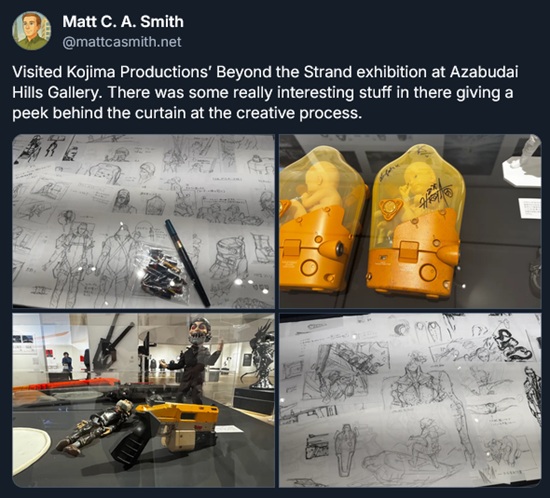
The next day, we visited the main exhibition at Azabudai Hills Gallery. Beyond the Strand celebrates the 10th anniversary of Kojima’s independent studio, established after his split from Konami, and goes behind the scenes of the Death Stranding series and upcoming titles OD and PHYSINT.
It’s rare that a “behind the scenes” exhibit truly offers anything that wasn’t already public, but this was definitely worth the entrance fee. Amongst the props and collectibles were Shinkawa’s sketches for the design of everything from the company identity to Sam Porter-Bridges. Having followed the studio from the outside since its inception in 2015, it was a treat to take in the creative process from initial concepts all the way through to the final designs.
Design beyond minimalism
I’ve long been tired of the white space-heavy digital minimalism that crept into our lives during the 2010s, and has only continued to consume design in a way that feels so bland and wasteful. So I was interested to note how much louder design often is in Japan, while maintaining a sense of balance.
Some of this is natural by context – the Japanese scripts are more complex than romaji, so they give designs a busier look. But beyond text, there’s much more variety to be found in pattern and colour. For example, one corner of my bathroom at the onsen hotel joined walls that bore three distinct motifs, while somehow still making everything work aesthetically.
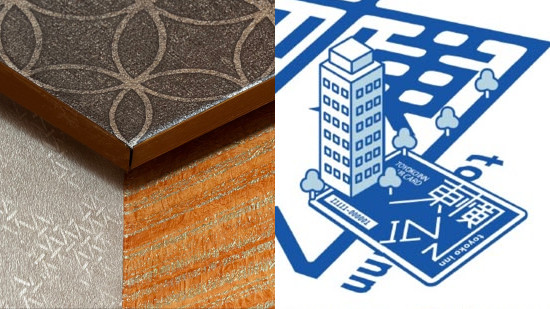
Despite some AI slop on the streets, the lower end of the market is also generally pleasant to look at. One business hotel’s lift carried a playful advert for its loyalty card, the brand name’s kanji set at an angle as though it were an isometric city map, with a rendered hotel sitting on top of the card. There is plenty of generic advertising on the Tokyo Metro, but also designs that make an effort to recall bygone decades. There’s just so much more variety, and I’d love to see more of this imagination and character return to the West.
Observations and recommendations
I’ll leave you with a few other notes and observations from my trip to Japan. These didn’t quite fit elsewhere, but hopefully they’ll help to flesh out your mental picture of the place with some of the finer details.
-
I cannot overstate the quality and affordability of the food I ate in my two weeks in Japan – sushi, sashimi, pork katsu curry, donburi, beef steak ju, chicken karaage, oden, you name it. But the highlight has to be the delicious melt-in-the-mouth Wagyu steak I ate on my return to Teppan-ya near Iidabashi station, which somehow cost only ¥5,000 each (around £24), including a glass of wine and a shared appetiser.
-
My expectations of crime are baked in at London levels. I often found myself asking things like: “Is it safe to leave these suitcases in the car boot while we eat?” To which my wife’s response was simply: “We’re in Japan.” I’d always overlooked this reflexive defence mechanism, but now my attention is drawn to it, it’s sad that it’s necessary.
-
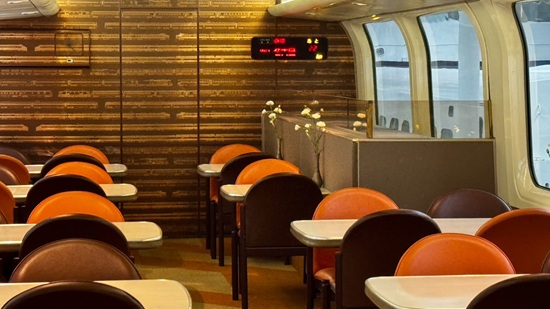
The SCMAGLEV and Railway Park in Nagoya is a little out of the way, but well worth a visit if you get the opportunity. Its exhibits include shinkansen dating back to the 1960s (with some very stylish dining carriages). It also holds a retired Doctor Yellow train, which was used to test the tracks and report back for maintenance. Inside the cabin is a fascinating video about how the shinkansen network is maintained, including how old rail is simultaneously lifted and replaced.
-
Tokyo’s organised mess of public transport is impossible to predict. People live and work all over the city (my wife’s friend used to live in Shinjuku on a very reasonable budget), which means it doesn’t fall as far into the London trap where everyone goes one way in the morning and the other in the evening. The flipside is that regardless of the direction or time of day, there’s about a 30 percent chance that your train will arrive completely rammed with passengers.
-
The good news is that air conditioning is both everywhere and immaculately tuned. My London brain saw busy trains approaching and thought: “Well this will be a slog.” But with effective AC and healthy respect for personal space, those trips are usually very tolerable.
-
If you plan on visiting Japan, prepare to spend more time than you’d expect on escalators. Cities are extremely vertical, and shopping centres are usually stacked rather than flat. This translates into endless time following chains of shoppers along the path up to the shop you want to visit, and back down to ground level when you’re done.
-
The outskirts of Japan’s smaller cities often remind me of the US (specifically Texas, although that’s probably just because it’s where I’ve spent the most time). There are long, straight, wide roads flanked by shops and restaurants that each sit on their own little plots, with their own car parks, and with large signs to lure punters in. It’s an interesting parallel given how different the rest of the country is.
-
Working in cyber security, I was amused to note the capsule machines allowing kids to build their own fully-licensed miniature server racks, including components from vendors like F5, Lenovo, and NEC.
My descent towards Heathrow concludes a trip that was busier than intended and didn’t always go to plan, but was nevertheless enjoyable. I’m pleased to have found time and space to record so many thoughts. I’ve seen a lot that I’d like to remember and integrate with my daily life and work – especially all that beautiful anti-minimalist design – and I’m sure that the jottings in the makeshift notebook sitting on my tray table will help.