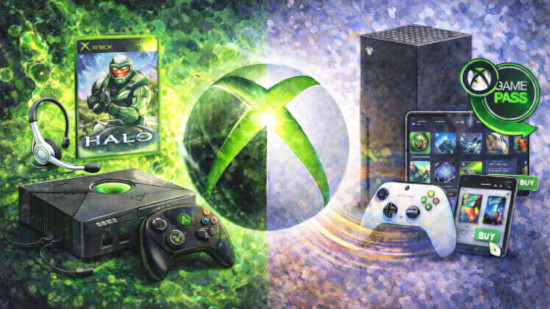
We are witnessing the death of the games console
The whole concept of a video games console is on its last legs. It’s been a long time coming, but a combination of technological advances, market conditions, and – more than anything – business decisions have led us here, and I really believe the days of PlayStation and Xbox may be numbered.
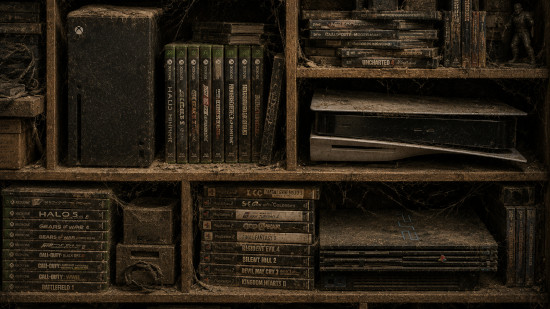
Remembering the golden era
PC devotees might argue that it was only a matter of time until Sony and Microsoft found themselves in this predicament, but I disagree. Just take a look back at where we came from. The whole concept of a games console was that it was an easy way to play. You bought a box, plugged it into your TV, inserted a disc, and played. In exchange for locking in to a manufacturer’s ecosystem, you usually got a decent discount on the hardware itself.
Until recent years, games were always distributed on discs, cartridges, or cards. They were designed specifically for your console, so you knew they’d work without the technical tinkering that’s often necessary on PC, and you could line them up on a shelf to play indefinitely into the future.
Nothing forced any of this to change. No technology or regulation rendered discs obsolete. Yet in recent generations we’ve seen the steady erosion of the very characteristics that made games consoles a viable product and a worthy alternative to PC gaming – and it’s mostly the manufacturers’ fault.
The missing rival
You'll notice that I'll focus very much on Sony and Microsoft in this post. I'm aware that Nintendo is out there with the Switch, but I won't go into detail because: one, I'm not as familiar with their output; and two, they're doing something quite different and focusing on gameplay over graphics. Who knows, maybe they'll be there to mop up the mess the other two leave behind.
Diminishing generational returns
The value of investing in a console generation has diminished. The current consoles – the PlayStation 5 and Xbox Series X – arrived with marginal graphical improvements over their predecessors, and you could argue that there hasn’t been a notable wow factor since the PlayStation 3 and Xbox 360 heralded the advent of HD gaming. Inter-generational leaps have become shuffles, eliminating that “must-have” feeling around new launches.
Then there are the games. Back in the day, popular series used to see several releases per generation. But games have become so complex that they take many years to make, sometimes skipping generations entirely. The upcoming Grand Theft Auto VI will be the first new game in the series since 2013, while fans of The Elder Scrolls are still waiting on a follow-up to 2011’s Skyrim.
Such long gaps used to be unthinkable – both series saw two releases in the Xbox 360 era. But now the waits are so long that some fans who were still at school when the last game in their favourite series came out are now adults with their own kids. It leads gamers to question the value of the consoles themselves. Why invest in the hardware when the next game in my favourite series could be another generation – and another upgrade – down the road?
Unattractive price tags
Prices are also beginning to weigh down the other side of the value equation. Historically, consoles were the cheaper option compared to PC gaming, and prices fell over the course of each generation. As the years progressed, the lower price of entry and growing library of games would entice more gamers to enter the console’s ecosystem, even as the next console cycle approached.
However, both Sony and Microsoft have actually increased the prices of their current consoles since their launch. In the UK, the PlayStation 5 became £90 more expensive earlier in 2026. Not to be outdone, Microsoft has just spiked the price of the Xbox Series X from £500 to £670. It’s unprecedented.
Reports attribute these changes to a combination of post-pandemic inflation, the RAM crunch triggered by investment in AI infrastructure, and internal business pressures. And the trend only looks set to continue, with rumours that the PlayStation 6 could cost upwards of £750. That’s a bar to entry that would be difficult for many to justify – especially when you consider that a similarly-priced PC is a multi-purpose machine, useful beyond gaming.
Tightening market control
Perhaps you could justify the investment in a more expensive console with fewer games if you could get a decent deal on the games themselves, and treat them as a long-term investment that you could return to in future. Unfortunately, the final nail in the games console’s coffin is manufacturers’ current campaign to eliminate physical games in favour of digital releases.
Sony has announced that from 2028, it will stop manufacturing PlayStation game discs, with games going digital-only. Players will have no option but to purchase games from the PlayStation Store, handing Sony a monopoly on pricing in a world without third-party discounts or preowned games, which provide value to consumers but are disliked by the big games companies.
More importantly, your back catalogue will no longer live on a shelf. It’ll exist on your console’s hard drive, and when that’s full, on Sony’s servers. If those servers disappear, so do your games. This was perfectly demonstrated by the closure of the PlayStation Store on PlayStation 3 and PlayStation Vita, which Sony announced in tandem with the end of discs in a cruel twist of timing. It said previously purchased content would be available “for the foreseeable future… to ease the transition”, but there will be an end date at some point.
On the green side of the aisle, Xbox continues to manufacture discs for now, but it still makes physical ownership of games more complex than it needs to be. Many disc releases require downloads to fix bugs or to work at all, and it isn’t uncommon for Xbox Series X games to release in a physical box with a digital download code. The future looks bleak for game collectors.
The death of the games console
So where does this leave us? Games consoles have become more expensive, less impressive, and have fewer games per generation. And the assault on physical media means you’ll likely pay more to effectively rent digital games, which will become unavailable at some undetermined point in the future.
Consoles’ value proposition has completely changed, and in my estimation manufacturers have now removed nearly all of the reasons to buy a console over a decently specced gaming PC. That could be a huge problem for them as gamers consider their options heading into the next generation.
A good PC will still cost you a pretty penny in 2026, but you’re free to choose how far upmarket you want to go and make compromises where necessary. PC gaming isn’t tied to generations – you could buy a top-end PC now and play comfortably for a decade or more. You can also upgrade it gradually over time, replacing components when needed, or when you see a good deal.
The manufacturers have removed nearly all of the reasons to buy a console over a gaming PC, which could be a huge problem for them.
PC gaming is of course digital-first, bordering on digital-only. It was the first platform to shift in that direction when Steam arrived on the scene in 2003. But at least the open nature of the PC and the availability of DRM-free games from platforms like GOG means some preservation is possible if you wish.
Without generations to worry about, your game library stays with you into the future. Backwards compatibility isn’t a concern either. Although older titles from before about 2010 might require some fiddling to get working, in general they’ll all run fine – even better – as your hardware improves.
I have a lot of good memories with games consoles over the last 30 years, but I struggle to see myself buying anything newer than my current PlayStation 5. The incentives just aren’t there, and Sony’s discontinuation of discs in an effort to gain more control over the games market was the final straw.
The console manufacturers had something good, and ruined it. If the next generation fails, they’ll attribute it to “consumer preferences” and “market conditions”, but they made the decisions that stripped the format of its value. The consequences of those decisions go further than they probably realise.
I expect the new consoles that arrive in the next few years to perform poorly, and depending on how things go, they may even be the last of their kind. In years to come, when you dig your dusty old PlayStation 2 or Xbox 360 out of the attic to show your kids, those brand names may be relics of the past, as foreign to them as Amiga or ColecoVision are to children today.