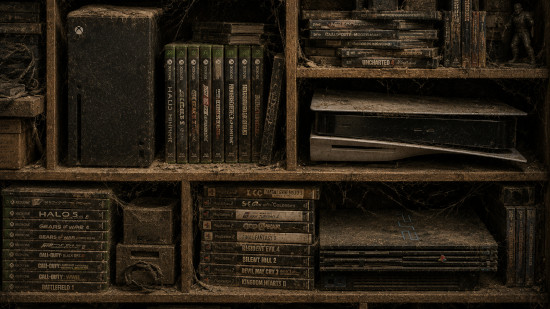
You will never own another PlayStation game again
I wrote just a month ago about how hardware manufacturers are eliminating all the reasons to buy a games console, and their pace just keeps increasing.
Sony announced back in July that it would end the production of physical discs for PlayStation games by 2028. It acknowledged the backlash on its Q1 earnings call – many fans say they’ll refuse to buy a PlayStation 6 without disc support – but it just doubled down and told investors that it didn’t expect the change or the subsequent unrest to have a negative impact.
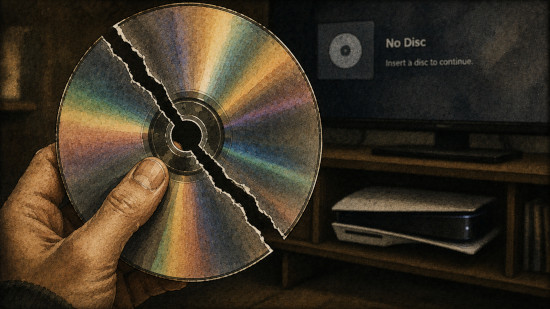
Gamers’ wallets, on the other hand, will feel the pinch. Digital-only games hand manufacturers a monopoly on pricing, tightening control by confining sales to a digital store and ending the preowned games market. Discounts could be rare and shallow in a world without competing options.
But the worst part for me is the end of game collections. Your games will exist only as long as Sony’s servers are available or your console’s hard drive is operational. If a game is no longer available to download and you don’t have a local copy, it’s as good as gone – as demonstrated by the recent shutdown of the PlayStation Store on PlayStation 3 and PlayStation Vita.
Ownership versus licensing
Now Sony is defending itself in a California class action lawsuit that alleges that it does not make it clear enough that the PlayStation games users pay for – with terms like “buy now” and “confirm purchase” in the interface – won’t be available to them forever. I’m no expert on Californian law, but what’s interesting is the way Sony describes its user agreement in its filings.
The main thrust is that the case should be dismissed because users waive their right to a class action lawsuit via the PlayStation terms of use, and they haven’t actually lost access to any of their games yet. But then comes the interesting part where Sony addresses the “licence versus purchase” issue.
“Plaintiffs admit that before customers confirm any purchase, the PlayStation Terms and the SPLA are disclosed and assented to, including licensing details, so that a reasonable user would have seen and reviewed them before acknowledging them and completing the transaction.”
Sony then breaks down its terms, which state that while gamers can use their games, they “do not own the product”, and terms like “ownership, purchase… or buy… do not mean or imply any transfer of ownership”. It later reminds them that the terms also state the licence that users receive is “revocable”.
“In the digital age, it is not plausible to allege that reasonable consumers believed they were obtaining ‘ownership’ of a digital game,” Sony’s lawyers say, before launching into an argument about how if one player exclusively owned the game then the others wouldn’t have been able to buy it. This practicality, they say, shows that users understood the licence model.
Another nail in the coffin
At the risk of getting into semantics, surely the claimants’ assumption was that a copy of the game would be available to them to play forever, not that they owned a single, unique item. After all, when we buy games on disc we don’t own them exclusively – but we know the data etched into that plastic will be available for as long as we hold onto it. Discs degrade, but consumers have some control over that risk – unlike a company’s server budget.
Exact wording aside, what stands out to me is that this is a company arguing that statements in its terms of service – which reach almost 10,000 words in the US – are sufficient to override the everyday meaning of more prominent words on the store interface. To me, this rationale shows exactly the kind of lopsidedness I keep coming back to when I write about care (or its absence).
I believe that a consumer paying $70 for a video game should be able to access it in perpetuity.
Regardless of who’s legally correct, I believe that a consumer paying $70 for a video game should be able to access it in perpetuity, as they could before the advent of digital games. This issue isn’t unique to Sony – the same applies to games purchased through Xbox, and while Steam isn’t affected by the same generational boundaries as consoles, we’d still lose access if it went down.
Only DRM-free platforms like GOG provide installers that don’t need online activation, which could feasibly be backed up and kept forever. So if you care about building a game collection that will last years into the future and isn’t reliant on a company’s servers, they may be your best bet going forward.
PlayStation fans, however, will have a difficult decision to make when the next generation comes around. Sony is intent on consigning discs to history, and adamant that you don’t actually own your digital games. Is a console that supports only a transient game library worth the investment?