


New Xbox boss Asha Sharma inherits an identity crisis
There was huge change at Microsoft this week, as Xbox boss Phil Spencer retired after 12 years at the helm, to be replaced by CoreAI lead Asha Sharma. The switch sparked widespread debate about the state of the modern gaming industry and the future direction of one of the world’s favourite pastimes.
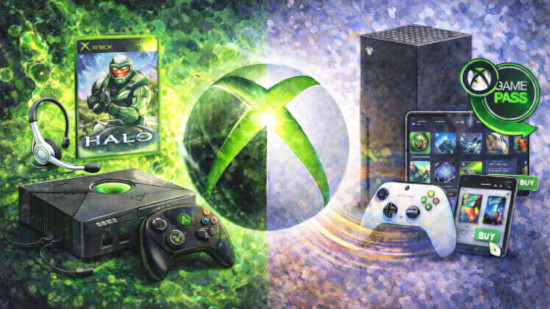
Enshittification – the erosion of a product’s value in search of profit – often shows its face through overtly anti-customer actions: feature removal, new premium tiers, and price hikes. But it sometimes takes a less obvious form, when a brand successful in a niche attempts to appeal to a mass market and loses what its original audience liked. Over the last decade, Xbox has been an example of both as it has sought to attract an ever-wider demographic.
The conundrum facing Xbox – one which Sharma will need to tackle in her new role – is reflective of broader trends in the industry. Gaming has become too big to be ignored by the business-focused minds at the top, but removing the people who built the culture creates distance between companies and the fans they depend on for their continued success.
Birth of a brand
When the original Xbox arrived on the scene in 2001, it was edgy. Microsoft needed to make a statement to attract attention in an industry dominated by Sony and Nintendo, and its advertising was dark, sometimes bordering on creepy. In the UK, the most famous example was the “life is short” advert, which depicts a baby shooting out of its mother and ageing as it hurtles through the air to its grave. It was banned after complaints from viewers.
The device itself reflected this identity. Booting the Xbox felt like stepping into an alien spaceship, the logo formed from bubbling green plasma inside a dark foundry. Menu navigation was punctuated by high-tech beeps and swooping motions through a 3D space. For a generation of gamers used to the PlayStation 2’s simple interface, it was like nothing we’d ever seen.
With its bubbling green plasma and high-tech beeps, booting the original Xbox felt like stepping into an alien spaceship
The focus for all contenders in that era was on games, and the top-selling titles on the Xbox reflect its placement and audience. Top of the list were Halo and Halo 2 – flagship releases that demonstrated the power of the console and paved the way for the mainstream online gaming we see today. Halo 3, released for the Xbox 360 in 2007, would sell 14.5 million copies.
As a company, Microsoft seemed to get gamer culture. While the parent’s logo was stamped on the boxes, the Xbox brand always felt distinct. This is probably best demonstrated by Larry Hyrb, who joined the project in 2003 and would stay for 20 years. Better known by his gamertag Major Nelson, Hyrb became the face of Xbox – fronting announcements, podcasts, and so on – and contributed to the feeling that Xbox was just a group of passionate gamers, rather than a division within a multi-billion-dollar corporation.
Diluted identity
This continued into the Xbox 360 era, but as we entered the 2010s and the next generation loomed on the horizon, something had changed. Through a succession of software updates, the “blades” of the original dashboard were replaced by avatars and tiles. The 360 was a transitional phase, and by the end of its lifespan the interface looked like an extension of Windows. The once edgy and aloof Xbox brand had been reined in by Microsoft.
Why? Likely because by the 2010s, gaming was a sector too big for the suits to ignore. What started as a kind of side project for Microsoft had snowballed into a decent revenue stream, with the 360 shifting a reported 84 million units compared to the original Xbox’s 24 million. During 2010, Xbox made $6.4 billion from sales. In an era where everything must be optimised within an inch of its life for extra revenue, it was inevitable that gaming would end up on the radar of those who would seek to broaden its audience.
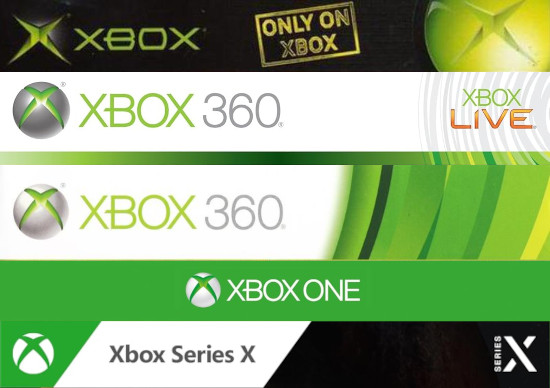
In 2013, Microsoft unveiled the next-generation Xbox One. The showcase was disastrous, and its implications would be felt for a decade. Microsoft brought to the table a less powerful console than Sony’s PlayStation 4, focused on TV support and weighed down by the cost of mandatory Kinect motion capture technology that held little appeal to hardcore gamers.
Microsoft’s biggest misstep concerned digital rights management. The Xbox One was planned to be always online, with mandatory registration even for games purchased on disc – placing limits on sharing, lending, and reselling. The restrictions were removed before launch, but the announcement showed how out of touch Microsoft was with Xbox’s core audience.
Phil Spencer’s 2014 appointment as Xbox head was almost an admission that Microsoft had gone too far. While undoubtedly a business figure, Spencer had credibility with fans as a gamer – between 2010 and 2019, he amassed nearly 55,000 Gamerpoints across 424 games. He didn’t get everything right during his tenure, but his promotion was a signal to gamers: “We haven’t forgotten you, and we’ve put one of your own in charge to put it right.”
What is Xbox?
In 2026, Xbox looks very different. Major Nelson left in 2023. Microsoft has set about acquiring (and often subsequently shutting down) game studios. Its Game Pass subscription service is front and centre, and first-party titles often have limited or non-existent physical releases, putting the company at odds with gamers who prefer to own hard copies of their purchases. Its marketing in recent years – mostly minimalist, clad in industry-standard sans serif and a more palatable green – declares that Xbox is no longer a console: it’s a service that can be streamed to phones, tablets, computers, and more.
And now, Phil Spencer, the last of the old guard’s public-facing figures, has retired. In his place as Xbox CEO is Asha Sharma, who was until now the president of Microsoft’s CoreAI division, and has previously held primarily business-facing roles at Instacart and Meta. She inherits a brand with an identity crisis, having neither attracted a broad enough audience to recoup the cost of its acquisitions, nor satisfied hardcore gamers with recent output.
Amid concerns over her lack of gaming credentials, Sharma did at least provide some reassurance in her announcement post. It read very much like a corporate press release – a world away from early Xbox’s edginess – but she promised “the return of Xbox”, with “great games” free of “AI slop”. “We will recommit to our core Xbox fans and players,” she said on the Microsoft blog.
What's in a profile?
With Spencer having been such a prolific gamer, attention naturally turned to Sharma's gamertag, which looks... suspicious. Her Gamerscore is about 11,000, but her account only began playing a month ago and has played 29 games – a very high play time in such a short period for a senior Microsoft executive (she later said it was a shared family account). It's debatable whether a CEO needs to be a keen gamer, but many argue familiarity matters in such a unique industry, and many of the fans Sharma hopes to woo are not impressed by what they see as an attempt to dupe them.
It feels more than ever that there’s a choice Sharma and her team need to make: Is Xbox a family-friendly multimedia brand, focused on subscriptions and enabling more casual players to play without splashing out on a console? Or is it what it historically was – a gaming brand at the cutting edge, driven to deliver the most powerful console possible and build games targeted at hardcore gamers that squeeze out every last drop of performance?
The options aren’t exclusive, and it’s possible Microsoft has painted itself into a corner – perhaps it needs that wider audience to make up the billions spent on studios like Activision Blizzard, Bethesda, and Mojang. Maybe the core gaming audience just isn’t enough to sustain that level of spending.
But regardless of the direction she chooses (or is compelled to take), brand dilution remains a tricky issue for Sharma and Xbox to solve. It’s increasingly clear that chasing a universal audience, trying to be all things to all people, is a sure way to kill any buzz and loyalty your company has earned in its niche. And even from a purely financial perspective, that’s not good for business.

