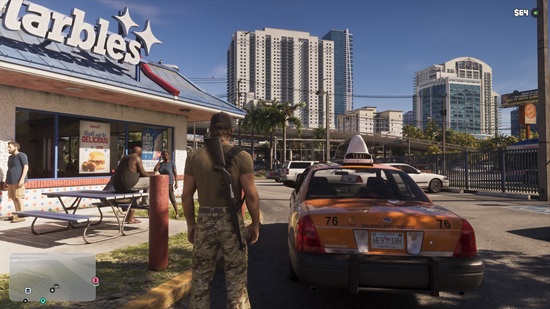
GTA VI, the Gell-Mann amnesia effect, and presence
One of the three values I believe is integral to good business and good living is presence. It means closeness to people, proximity to the actual work, and – perhaps most importantly – staying in touch with the real world.
Social media is sometimes a necessary evil to keep up with news and friends, but it actively works against presence. It creates perceptions based on algorithms that reward engagement, noise, and controversy, sometimes to the point that it influences offline behaviours, mindset, and quality of life.

Gripes and grifters
When Grand Theft Auto VI launched last week, clips hit social media well before the UK launch time (largely from “content creators” with early access and players who changed their console location settings to New Zealand).
Those early videos and posts were a mixed bag. Some users heralded GTA VI as the greatest game ever, but there were just as many critics proclaiming it to be a broken mess. If you believed everything you read on X, you’d think:
- Game performance struggles, dipping below the 30 frames per second target so frequently that action sequences are unplayable slideshows.
- Driving mechanics are broken, with vehicles sliding uncontrollably and NPCs deliberately moving into the player’s path to cause accidents.
- The main story consists primarily of mundane tasks like picking up groceries and doing home DIY to keep your virtual girlfriend happy.
- The game floods the player with so much cash that past a certain point they’re filthy rich, but there’s nothing at all to spend it on.
- GTA has “gone woke”, placing limits on player freedom to restrict the violence and mayhem that defined the series.
There is some truth there. The game does sometimes drop frames, driving is more grounded than in GTA V, and there is a new morality system. But none of the issues (if you can call them issues – some are just Rockstar’s design choices) prevent enjoyment of perhaps the most ambitious game ever.
Unknown unknowns
But their significance was amplified through social media platforms that reward speed and controversy with followers, attention, and payouts. This incentivised some players to post before they had progressed far enough to unlock mechanics that would resolve their complaints, and others to post maliciously to capitalise on the outrage they’d cause (in other words: ragebait).
It’s obvious to anybody who has actually played the game for any period of time that these posts are exaggerations (at best), but they get enough traction that they still appear regularly in my feed. The engagement likely comes from the game’s detractors, but also from users who haven’t played it.
This is the Gell-Mann amnesia effect in action. When we are experts on a certain topic, we can see through the online noise and separate truth from fiction. But when we lack that real-world knowledge, we can’t apply the same scrutiny and our tendency is to trust media reports and social media posts – even when we know we can’t trust them in domains we’re familiar with.
We still let social media and news reporting shape our perception of the world. When we open our feeds and see posts relating to politics, economics, business – even less “serious” topics like sports and relationships – we take them at face value, and when certain motifs appear repeatedly we slowly begin to accept them as fact and incorporate them into our worldview.
Tactical naming
While the phenomenon is named after the physicist Murray Gell-Mann, it was actually coined by author Michael Crichton following a conversation between the two. "You read with exasperation or amusement the multiple errors in a story – and then turn the page to national or international affairs, and read with renewed interest as if the rest of the newspaper was somehow more accurate about far-off Palestine than it was about the story you just read," Crichton said in a speech. "You turn the page, and forget what you know." On the name, he explained he thought a more famous name would give the theory more weight.
Amplified issues, hidden good
And then there’s the news and discussion that you don’t see at all. I recently read a blog post by Cory Dransfeldt, a software developer who said he’s no longer excited by tech. The gist was that most of the headline tech innovations – folding phones, cryptocurrency, AI search – offer little value to end users and in some cases perform worse than existing technologies.
He also highlighted projects he is excited about, described as “things that are boring and things that are stable”. These included tools I’ve discussed before and use regularly, like Kagi and Obsidian. They’re out there, they provide value, and they’re relatively quiet. They’ll never generate the noise that new technologies backed by major businesses and billions of dollars do, but they’re useful products that show there is still good stuff happening.
Social media puts a spotlight on the problems, and it takes intention and mental effort to grant more weight to what you see with your own eyes.
And then there are the complaints – societal decay, transport issues, rude behaviour, and so on. There’s no doubt that these affect some people sometimes. But when you see it online every day, you start to feel as though it affects you personally much more than it does. For example, the internet is full of stories of tourists being rude in Japan, but when I visited they were nearly all very well behaved. It takes intention and mental effort to grant more weight to what you see with your own eyes when you step outside.
You don’t need me to tell you that social media isn’t real life. But like the knowledge gaps that only reveal themselves in discussion of things you know yourself, perspective gaps on social media only show when statements collide with your lived experience. In my case, the game I’ve played for tens of hours bears little resemblance to the broken mess I read about online.