


Self-driving cars are here, but the friction is in the sale
On a recent trip to Austin, Texas, I was tempted to take one of the Waymos or Robotaxis that so casually roam the streets. One day, I was even offered one as an alternative to waiting 11 minutes for an Uber driver. I probably would have taken the plunge had all my journeys not involved the highway - I just wasn’t ready to trust the technology at 75mph or more, right from the off.
Self-driving functionality continues to receive billions in investment, and related schemes keep spreading - Waymo recently announced plans to run its cars in London from 2026, for example. But what’s interesting to me is that the tech sector has focused its efforts on the most technically challenging problem - driving - when the buying process generates far more stress.
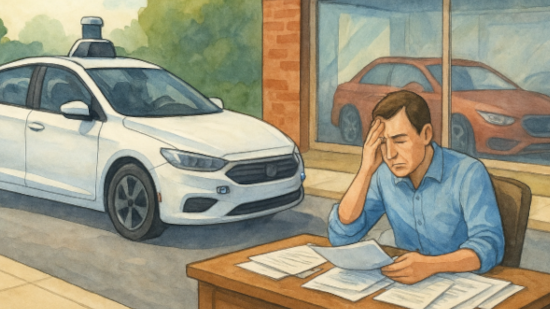
My wife and I recently bought a car, and it was almost as stressful as buying property. There were many moving parts with significant legal and financial consequences. We were presented with finance options that made no sense, and offered products like GAP insurance that were effectively worthless in our scenario. The only saving grace is that the process was relatively quick.
Whether human or AI-driven, an independent consultant would have been invaluable: to guide our choice of model; arrange a pressure-free test drive; discuss finance options from a neutral standpoint; and provide a checklist not only of minimum standards required for the vehicle not to be considered faulty, but for us to confidently say we fulfilled all of our obligations before we drove away. The tech is there, so why hasn’t this been solved yet?
Opportunities and incentives
Given the millions of cars sold annually and the sums involved, automotive sales feel like prime ground for tech disruption. Buyers face a minefield that requires significant technical and administrative savvy to navigate, and even a well-tuned AI assistant would be a big help. A small fee or commission is a worthwhile price to pay for more confidence in such a major purchase.
Instead, tech companies are focused on removing a task that many people enjoy, while overlooking the sales process that everyone hates. There are many potential reasons why, but the explanation might be as simple as this: automating driving is an ambitious “moonshot” challenge, while smoothing out purchasing is far less glamorous. There are also business factors at play: self-driving functionality is far more likely to earn annual recurring revenue, while support for car buyers is a one-off service, likely with a lower margin.
The irony is that autonomous vehicles might solve the problem after all. Widely deployed self-driving taxis might eliminate the need for ownership altogether, and that stressful buying process might die of irrelevance.
FSD versus Waymo
Despite the hype, even the owners of self-driving cars don't always use the feature. At dinner one night in Texas, I spoke to the owner of a recent Tesla with Full Self-Driving. His wife recently took a business trip to San Francisco and excitedly sent back photos from inside a Waymo. His response: "We've had a car that can do that for the last four years, and you never use it!"

